By Tainan Messina
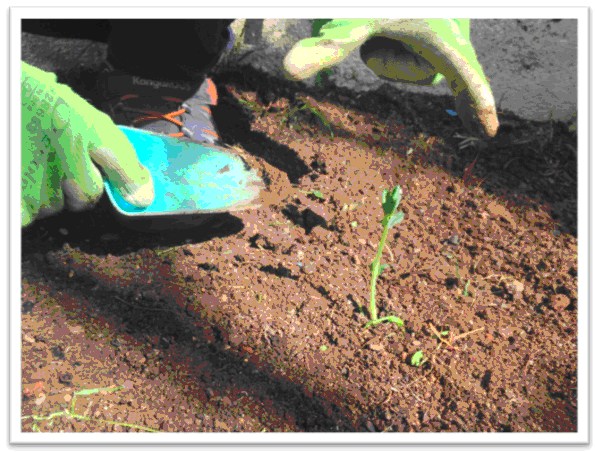
One of the first things that called my attention in Lisbon, when I first arrived from Brazil, was the amount of used and unused green areas available within city limits. As I disembarked straight from Rio de Janeiro, a city that struggles with land scarcity, real estate development and gentrification, Lisbon’s land availability confused and amused me at the same time. On my everyday commute, I would think about all the possibilities these areas had to offer to local communities` improvement, for food production enhancement and for the overall promotion of the United Nations Sustainable Development Goals (SDGs). Worldwide, cities have the challenging task of how to pursue multiple SDGs, and Urban Food Gardens (UFGs) may present an interesting window of opportunity, with numerous options. These gardens, where ‘open spaces are managed and operated by members of the local community in which food or flowers are cultivated’ within urban or peri-urban limits, have the potential to address both municipal specific issues or wider regional goals if properly integrated in local/regional policy frameworks, boosting Lisbon’s food security, food systems’ design and overall social well-being.
When we look at urban planning strategies and policies, food systems are less visible and seem to be less of a priority than other systems, like housing, transportation and employment generation, and Lisbon is, in this sense, no different. However, as urban populations grow and climate change impacts become more frequent, food systems need to be looked at more comprehensively, and different institutional arrangements must be considered in order to tackle key food security and urban challenges.

 Blogue SHIFT