By: Umay Begüm Külekçi
The 37th Middle East Technical University (METU) International Spring Festival took place in the second week of May in the university campus located in Ankara, Turkey. The four-day festival is organized by the volunteers of International Youth Community — a university student club that organizes social events in METU without any sponsors. The programme of the festival consists of workshops, gigs, food stands, university club activities, and finally, the most anticipated event of the festival, the concerts. Every year, there are different line-ups for each day, and the Devrim stadium welcomes different artists on its stage. This year, on the last day, a guest on stage came to read a letter from Esra Işık, an environmental activist from Milas who was imprisoned during that time. I realized based on the curious faces around me that many people did not have any idea who she was, thus I want to briefly explain her struggle.
Akbelen Resistance
Esra Işık is the daughter of Nejla Işık who is the headwomen of İkizköy village in Milas, Turkey. İkizköy and many other villages in the region have been actively resisting for many years against the lignite-powered thermal power plant operated by the company YK Enerji. Similar anti-mining resistances have been in effect in other regions of Turkey also. In the last 10 years, this year (2026) in particular, there has been a dramatic increase in mining projects as part of the AKP (Justice and Development Party) government’s development policies. All around Turkey, licenses are being issued in large numbers and structural changes are being made to make the fields eligible to the mining projects with the cooperation of state and capital as new profit seeking opportunities. Akbelen Resistance (also known as İkizköy Resistance) in Milas was one of the most heard resistances opposing to these ventures as they have been resisting since 2019 to YK Enerji who is claiming their land and cutting down their olive trees through the urgent expropriation decisions implemented by the state. Through the resistance process, the villagers have gathered support from a variety of actors such as environmental platforms, activists, journalists and academics.
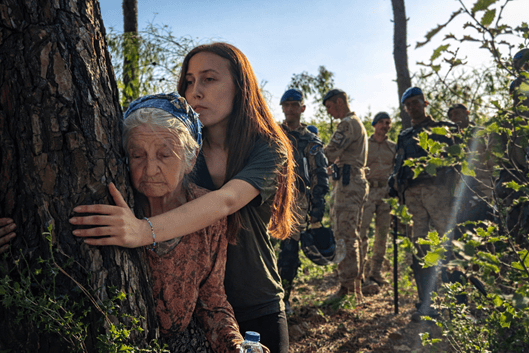
Figure 1 Selen Çatalyürek, 2023, Instagram (@selen_catalyurekli).
Recent Decisions of State Mechanisms
In January 2026, there was a new urgent expropriation decision published in the Official Gazette that included 676 parcels in İkizköy and near villages to extend the mining field, which would lead to a considerable land grab from the villagers. As the villagers seeked judicial support from the supreme court, the expansion was taking place through uprooting of olive trees, dynamite explosions and exploratory work on the lands of villagers without any prior notification. In fact, similar events have been happening for the last decade in Milas and other regions in Turkey. In early May, the supreme court decided to halt the execution for 194 of the parcels which brought some hope. (YK Enerji, n.d.) Most recently, the decision was expanded to include all 679 parcels.
Esra Işık was a part of the resistance for many years as her family lived in İkizköy village in Milas district in Muğla, Turkey and she was at the forefront when the expert appraisal came for the lands under urgent expropriation. She told the gendarmerie to go away, that no one asked for the permission of the locals to enter their lands and asked why no one was answering their questions. Shortly after, she was arrested and held in prison for 41 days (Bianet, 2026). She highlighted that her arrest was to intimidate others like her and that they will never give up fighting for their lands. In her letter from the prison to students, alumni, staff and other attenders of the festival, she emphasized similar messages and asked for the crowd to sing together “Deniz Üstü Köpürür” (The Sea Foams) by Cem Karaca, a song that highlights the love of homeland. Her wish was quickly fulfilled, creating a beautiful scene of solidarity from miles away.
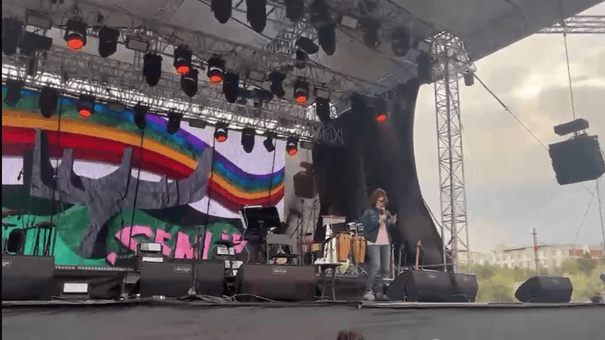
Figure 2 Screenshot from the video of the moment of Esra Işık’s letter being read. METU Media Society, 2026, Instagram (@odtumedya).
Understanding the Implications
She was released on May 11, 2026 with the judicial control decision and international travel ban. This is a sentence that has become commonly and widely employed by the state in recent years. However, we know that the criminalization of ecology activists is also a part of the authoritarian mechanism that profits and nurtures the state-capital relation at the cost of its people. All the process from the beginning to the recent news points to how the capital accumulation process is working through the “authoritarian neoliberal developmentalism” of the AKP government in Turkey. As a democratically elected party, AKP acts as anti-democratic and coercive to realize its agenda and one of the most large-scale and recent undertakings are related to energy sector as the world is also experiencing many crisis and frictions because of energy politics such as the war in Iran and Ukraine, and Trump’s intent on occupying Greenland, Venezuela and Cuba. This discussion is in line with the “global extractive imperative” that emphasizes where extractivism, accompanied by authoritarian neoliberalism is regarded as a quick fix for socioeconomic issues in the country. The discourse created around these issues usually includes the company defending themselves before the opponents of the mining project by resorting to either that they are (over)compensating the ecological damage through reforestation and transferring the olive trees elsewhere or highlighting the economic gains that the power plants create through employment and meeting the energy needs of Turkey, aligned with recently pushed governmental energy sovereignty agenda. This is not too different from the discourse created by Turgut Özal, a former prime minister of Turkey. In 1984 in Gökova, Muğla, Özal responded to the thermal power plant concerns of villagers by saying that it will bring civilization and employment while the villagers expressed concerns for their lands and agricultural activity.
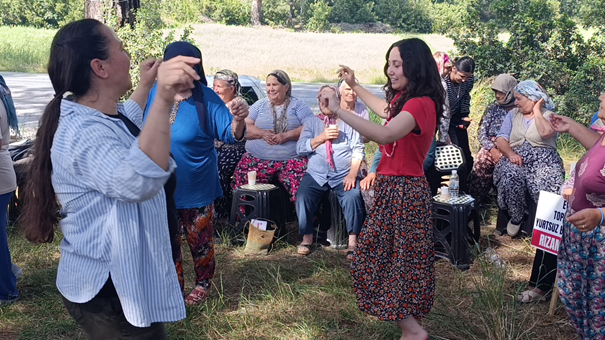
Figure 3 Esra Işık dancing to the traditional Turkish dance “Zeybek” with her mother who is the headwomen of İkizköy village and one of the most prominent people in the Akbelen resistance. 2026. Photo taken from the interview conducted by 1+1 Express
Concluding Words
To conclude, although the decision to release Esra Işık and halting the execution decisions for the parcels are achievements for the Akbelen resistance, it is hard to believe it hints at the end of the mining project since similar regime mentalities often allow some breaks to settle the crisis before striking again. However, I also believe that the resistance will only grow stronger as Akbelen shows an impressive determination and strength in terms of its material gains, but also of the immaterial effects it created in the larger scale and for the future resistances.
Umay Begüm Külekçi is a master’s student and research assistant at the Sociology Department of the Middle East Technical University in Ankara, Turkey. umayk@metu.edu.tr