By: Luisa Rossini
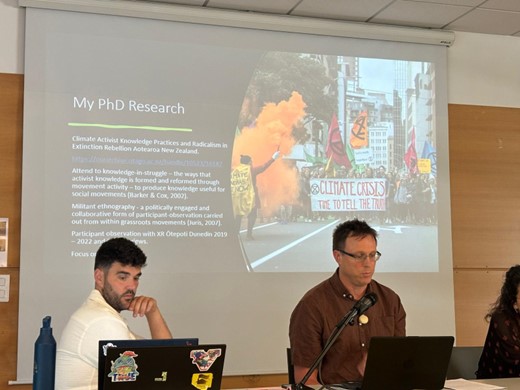
On the 1st and 2nd of July 2024, ahead of the 30th International Conference of Europeanists at the École normale supérieure (ENS) de Lyon, France, the Council’s Research Network on Social Movements hosted a pre-conference event that gathered 19 participants from 11 countries. As co-chair of this network, alongside the other organizers, I was thrilled to see how the event fostered meaningful discussions on the methodological, ethical, and political challenges social movement scholars face today. These challenges are especially pressing given that many scholars in this field are also activists or militants, navigating the complexities that such dual roles entail. Social movement research has grown into a vital space for examining social and political conflict, evolving from theoretical debates to practical approaches that shape our understanding of mobilization.

Organized around five thematic panels, the pre-conference offered a platform to address the main topics emerging from participant submissions, including: Issues of Positionality; Researcher/Researched Boundaries; Doing Risky Business: Advancing Knowledge without Endangering Activists (or Oneself); Deconstructing Scholars’ Categories of Thought; and The Social Movements Scholar Toolkit: Tool-Making and Tool-Selection. These themes reflect some of the shared dilemmas in our field, especially when considering the question, “How do you do research on/with social movements?”
Participants shared theoretical perspectives, in-depth fieldwork reflections, and pioneering methodological approaches. The sessions showcased a diverse array of movements, from Extinction Rebellion in Aotearoa New Zealand and secondary school activism to the Yellow Vest movement, Black Lives Matter, the Belarusian revolution-in-progress, and recent protests across Germany, Hungary, and Spain. Further topics included activism around ecological cooperatives in Istanbul, post-Soviet civil societies, climate and animal rights vs. farmers’ advocacy, and youth liberal-conservative activism in Spain. Together, these presentations fostered a vibrant space for exchanging innovative ideas, experiences, and critical challenges within the evolving field of social movements studies.
Both theoretical insights and fieldwork reflections were presented and discussed, as well as innovative methodological approaches, making the event an important space for exchanging ideas, experiences, concerns and challenges.
Methodological Challenges: Studying a Broad and Diverse Field
Social movement research has branched into numerous approaches over the decades, from the political process model to newer interactionist and sociological perspectives. The panel on “The Social Movements Scholar Toolkit” encouraged scholars to address the methodological complexity of studying diverse collective actions, including both visible episodes of mobilization and everyday politics, and grasping with complex phenomena, such as the way participants of social movements interact with each other or the process of tactical choice. To address the challenges posed by macro-theoretical perspectives in analyzing repertoires of action, participants engaged in discussions on innovative ways to construct databases on protest events using different source selections, as well as on combining various forms of data collection to reveal hidden patterns. There were also discussions on harmonizing diverse methods within consistent research designs.
Ethical Challenges: The Role of the Researcher in Value-Laden Environments
Another focal point of the event was the ethical intricacies in social movement research, particularly in politically polarized or conflict-prone environments. In the panels on “Issues of Positionality” and “Doing Risky Business” it was discussed how researchers try to navigate their roles in these settings. How should we balance our values and emotions when conducting fieldwork in high-stakes environments? This session illuminated the importance of ethical reflexivity, the management of sensitive information, and the protection of vulnerable individuals when research subjects are often activists or people facing social risk.
Political Challenges: Research with and for Social Movements
Social movements research uniquely positions many scholars as both observers and participants, often with personal stakes in the issues they study. The panel on “Researcher/Researched Boundaries” allowed us to explore this dimension, especially for researchers who view their work as engagement or advocacy. Through discussions on participatory methods like co-production, action-research, and co-research, we considered how researchers can responsibly integrate their values into their work. The presentation of practical examples enabled sharing the complexities on how to balance the dual roles of researcher and activist and how to align the differing timelines and objectives of academia and activism.
Advancing Knowledge and Re-Examining Scholarly Categories
The papers under the panel “Deconstructing Social Movement Scholars’ Categories of Thought” shed light on the prejudices and epistemological inequalities that are usually at the background of conceptual work, producing important blind spots in research. This session emphasized the value of adaptive research approaches that reflect the diversity of social mobilization across contexts; this triggered a stimulating debate on how conventional academic categories might limit our understanding of contemporary social movements.
Fostering Collaboration and Building a Collective Research Agenda
The pre-conference format was overall a great space for academic and political debate, as each panel was articulated with short presentations and a long time for discussion. It concluded with a general discussion where participants shared insights on potential projects and future directions for the field. A special issue containing some of the very interesting papers presented to this pre-conference edition will be published next year.
Conclusion
The pre-conference event in Lyon underscored the Council of European Studies’ Research Network on Social Movements as a crucial forum for advancing research on collective action. Organized around key methodological, ethical, and political questions, the event provided fresh perspectives on the complexities social movement scholars encounter today. Our discussions emphasized the importance of self-reflection, and ethical responsibility, inspiring a renewed commitment to understanding and supporting movements that shape new social, political and environmental struggles. I am deeply grateful to all who participated, making this event a powerful source of insights and substantially contributing to the growth of our network and the crucial networking among engaged scholars.
Luisa Rossini, PhD in Urban and Regional Planning, is a post-doctoral researcher at ICS, University of Lisbon, focusing on urban public spaces, housing movements, and policy impact across Europe. She is co-chair of the CES Research Network on Social Movements, and joined recently the European Marie Curie project DASH (Delivery Affordable and Social Housing).
 Blogue SHIFT